















- Home
- Commentaries and Reports
- An Interview with Janie Lancaster: About A Lost Fairy Tale
- Home
- Daily EdNews
- Book Review
- An Interview with Janie Lancaster: About A Lost Fairy Tale
An Interview with Janie Lancaster: About A Lost Fairy Tale
- By Michael F. Shaughnessy Senior Columnist EdNews.org
- Published 01/30/2007
- Commentaries and Reports
-
Rating:

Michael F. Shaughnessy Senior Columnist EdNews.org
Dr. Shaughnessy is currently Professor in Educational Studies and is a Consulting Editor for Gifted Education International and Educational Psychology Review. In addition, he writes for www.EdNews.org and the International Journal of Theory and Research in Education. He has taught students with mental retardation, learning disabilities and gifted. He is on the Governor's Traumatic Brain Injury Advisory Council and the Gifted Education Advisory Board in New Mexico. He is also a school psychologist and conducts in-services and workshops on various topics.
View all articles by Michael F. Shaughnessy Senior Columnist EdNews.orgAn Interview with Janie Lancaster: About A Lost Fairy Tale
Michael F. Shaughnessy Senior Columnist EdNews.org
Eastern New Mexico University
Janie Lancaster grew up in Middletown, New York.She has two grown children and a teenage granddaughter.She now lives in southern California with her husband Don, her childhood sweetheart.After working as a sign language interpreter for the last fifteen years and a college professor for seven, she has set out on a course to fulfill her childhood dream to publish her written works.
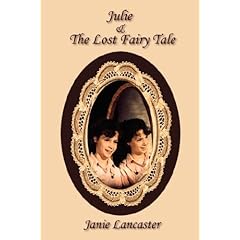
In 1997 at the Wildacres Children's Book Writers Workshop in North Carolina, Janie was picked as the most determined to be a writer. She has gone to numerous conferences sponsored by The Society of Children's Book Writers & Illustrators, The San Diego Book Awards Association and The San Diego Writers/Editors Guild.A t this time she has written three children's novels, fifteen picture books and numerous poems. In this interview, she responds to questions about her latest book, reading and literacy and the realm of " fairy tales" and the Brothers Grimm.
1) You have just gotten a book published entitled "Julie & The Lost Fairy Tale". What prompted you to write this story?
I wrote this story after I experienced a right brain awakening. Writing the story of Julie was the way my brain processed putting together Humpty Dumpty pieces of myself. I wrote about 4,000 words a day for a period of three days .Fairy tales and dreams were woven into a fictional story telling how dreams do come true even if you have to wait a very long time.
2) In the story you mention the Brothers Grimm. Is the current generation familiar with their work? And how have you incorporated the Brothers Grimm into the story?
The works of the Brothers Grimm has had a great effect on people for generations. But many of the current generation of children do not know how the stories were collected and passed on. In my story the history of fairy tales, how the Brothers Grimm had a part in recording them and the effect they have had on people is woven into the lives of several generations.
3) Why do you think fairy tales are important? What function do they serve?
Fairy tales(highly imaginative stories that teach a lesson or happily ever after stories) are important because they help us to change the unchangeable, cure the incurable and move the unmovable––even if it is just in a fictional story.
As a child living with an abusive mother I held onto dreams and fairytales, they gave me hope, something positive to believe in.
4) Who would this book appeal to more? Boys or girls?
My story was been printed as a serial story in newspapers beginning in September 2004. I have received many letters from both boys and girls telling me how much the story and the characters touched their lives. One ten year old boy said, "I loved the story of Julie & The Lost Fairy Tale because it is a good story and it made me happy when I read it." I wrote my story about people who are so realistic that it appeals to both boys and girls alike.
5) Do you write specifically for a certain audience?
No. I have written many stories for all ages from picture books, middle grade novels, a young adult novel and a therapeutic book for adults. My writing is driven by internal voices demanding to be heard.
6) What other books have you published?
Julie & The Lost Fairy Tale is the first book I have published. I hope to have two more books ready to publish in 2007.
7) Why do you think it important to get kids reading about "fairy tales"? Poetry?
Children need to have their imaginations stimulated and learn to express themselves without having to conform to another person's specific ideas or rules. I think that creative writing should give freedom of expression to children and that reading a variety of fairy tales and poetry give them examples of creativity, thinking and writing outside the box.
8) What are the main emotional issues that writers have to deal with in terms of writing for children, and adolescents?
Writing for children brings a heavy responsibility with it because of the delicate emotions of our developing children. Children can't always differentiate between fiction and nonfiction, good and bad. If we are not careful we can plant seeds in the minds of children that can be harmful to them.
I lived with fear, too much fear, as a small child. I needed hope and a dream. In this unpredictable world hopes and dreams can serve as anchors for our children.
9) Do you have a web site where we can learn more about you, your writing, and your other works?
Yes. www.janielancaster.com
10) What question have I neglected to ask?
How do you think this book will be of benefit for the education of children?
My story has been proven successful in class rooms. It has been published as a serial story in Newspapers In Education since 2004. The story of Julie was tied in with literacy history, immigration studies and the use of the imagination in fictional writing.
I also have free teacher's lesson plans on my web site.
http://janielancaster.com/Julielessonplans.html
Spread The Word
Related Articles
Comments

